
Meet Tsveta Karaivanova
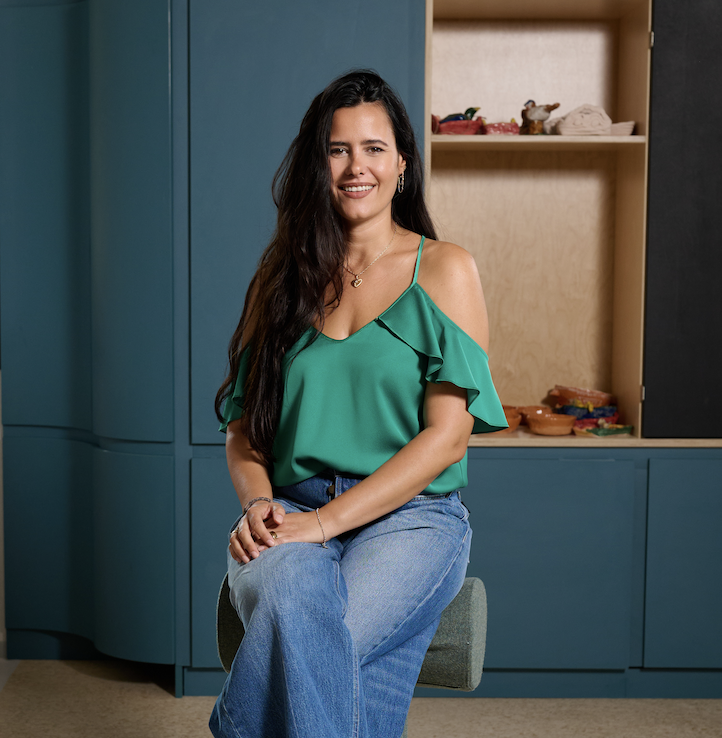
"The Future Starts Now"
Tsveta Karaivanova is the founder of AK-Arcus Junior Private Primary School and the driving force behind the creation of a school in Veliko Tarnovo Municipality that strives to build a bridge between tradition and innovation in education. She is boldly following in the footsteps of her father, the founder of American College Arcus, while also forging her own path in a new direction, driven by a desire to give her own children — and all children — the very best.
Tsveta has a warm, sunny energy that is impossible not to notice. Talking to her feels effortless: she is grounded yet fiery, spontaneous and almost always smiling. The depth of her worldview comes through in everything she says, but it is always backed by concrete action.
Tsveta holds a Bachelor’s degree in Finance from Israel and a Master’s degree in Management from Lugano, Switzerland. Soon after completing her studies, she returned to Bulgaria and settled in Plovdiv, where she began working in finance. She remained in the field for eight years, but after the birth of her two children, she decided to return to Veliko Tarnovo, seeking a quieter place to raise them. Little by little, the idea took shape that there was a need for an alternative approach to education — not only in her hometown, but in Bulgaria as a whole. And so began the first steps towards creating AK-Arcus Junior.
What motivated you to follow in your father’s footsteps?
On the one hand, I feel a sense of responsibility towards everything he has already built. On the other, I was raised to always try to live a meaningful life. In trying to do that, I met people who shared the same values and, once I took a step towards them, somehow the path ahead became clear. Everything suddenly made perfect sense. In short, I didn’t really have a choice but to follow these steps — and that makes me happy.
Do you use alternative approaches in your role as a parent?
I believe I do, even though I didn’t initially feel the need to formally educate myself about them. When it comes to education in particular, at this stage I feel it is more important for my children to grow up physically well and to develop their emotional intelligence. I think that is a wonderful starting point for any child.
How do you like to spend your free time?
My close friends are constantly joking that the increasingly popular term “JOMO” — the joy of missing out — really applies to me. And perhaps they are right. In recent years, I’ve tended to avoid noisy places and large crowds. In general, I’m quite selective about how I spend my time and who I spend it with.
Whatever I do, I like there to be some substance to it. I like to be fully present in the moment. Most often, those moments are when I’m walking in nature with my children, reading a book, travelling, or having a wonderful evening with good food and the people closest to me — family and friends.
What challenges do you see?
In general, I believe challenges are a very good thing. In this particular context, the challenge lies in the fact that our understanding of what constitutes a good education is undergoing a fundamental transformation.
I believe we are moving towards a time when, if we imagine our children as adults standing in front of us, it is time to ask ourselves not, “What do we need to do to make them successful?”, but rather, “What can we do now so that one day they will be grateful for the childhood they had?”
Childhood is the period from which an adult draws their psychological strength and resilience, while genuine competitiveness and the development of skills are closely connected to